
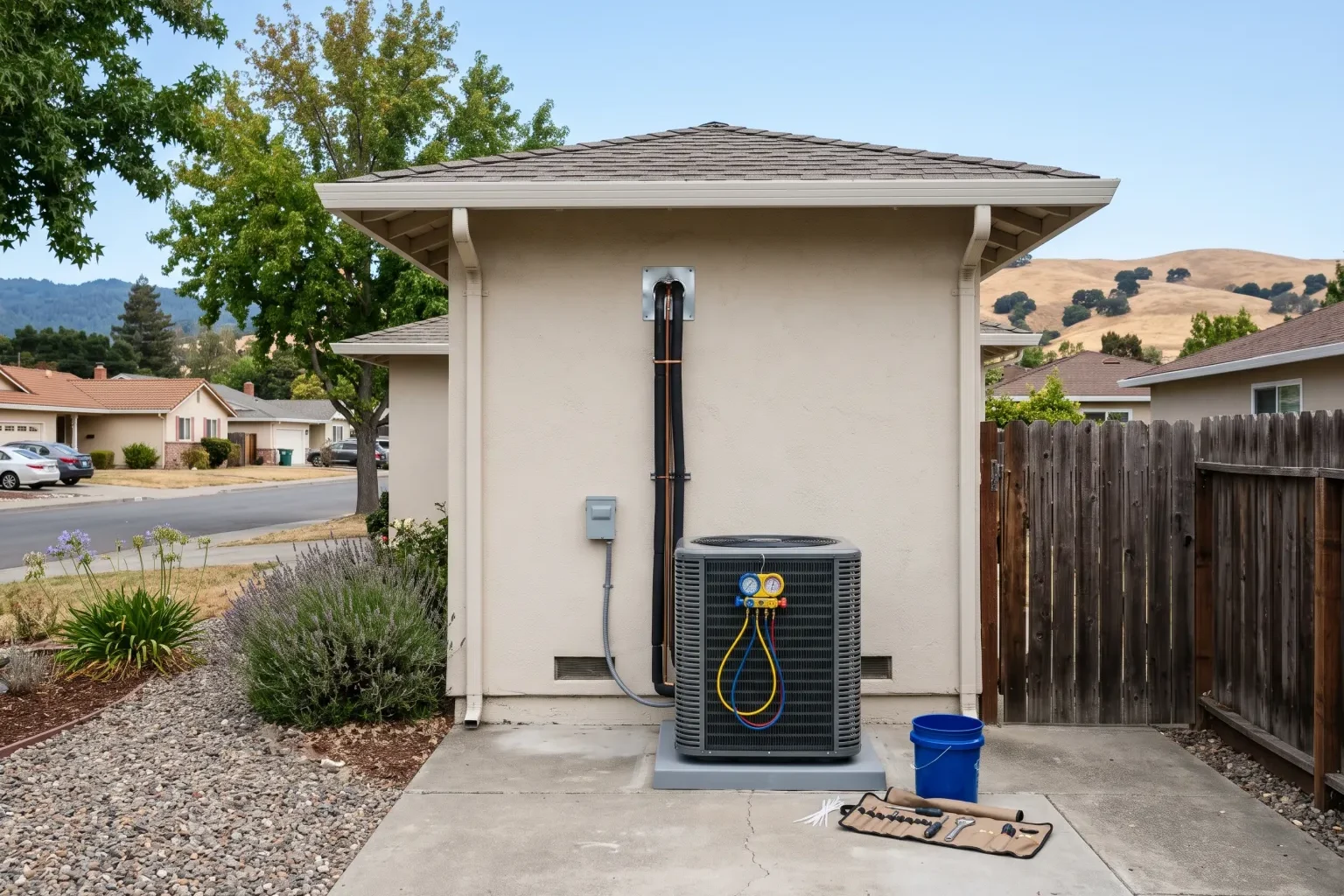
The short answer
Most San Jose homes benefit from having each heating and cooling system maintained once a year. Heat pumps that handle both seasons often do better with a check before summer and another before winter. A maintenance visit includes cleaning, safety and performance checks, and a plain explanation of anything that needs repair or replacement.
Heating and cooling systems in the Santa Clara Valley work through two very different seasons. Dry summers push air conditioners and heat pumps hard, especially in inland and southern parts of the valley, which run noticeably hotter than areas near the Bay. Mild, damp winters mean furnaces and heat pumps run in shorter cycles, and those cycles can hide small problems until a cold snap. Regular maintenance is how you catch those problems early. PerfectFix HVAC Services provides maintenance visits for homeowners in San Jose and nearby cities, covering gas furnaces, central air conditioners, heat pumps and ductless systems. This page explains when to schedule a visit, what our technicians look at, how maintenance helps you decide between repair and replacement, what affects the cost, and what to expect from start to finish.
Signs Your System Needs Maintenance
Most homes benefit from a maintenance visit once a year for each system. A heat pump that handles both heating and cooling often does better with a check before summer and another before winter. Beyond the calendar, your system usually tells you when something is off. Any of the following is a good reason to book a visit rather than wait for a breakdown.
- Rooms that heat or cool unevenly, or a system that runs longer than it used to
- Weak airflow from vents, even with a clean filter
- New noises such as rattling, squealing, buzzing or repeated clicking
- Short cycling, where the system turns on and off every few minutes
- Higher utility bills without a change in how you use the system
- Dust building up faster than usual, or musty smells when the system starts
- Water around the indoor unit or a drain line that seems clogged
- Ice on the refrigerant lines or outdoor coil
- More than a year since anyone serviced the equipment, or a newly purchased home with no service history
- A gas odor. Leave the house and contact your gas utility first, then schedule service
What We Check During a Maintenance Visit
A maintenance visit is a hands-on inspection and cleaning. The exact checklist depends on whether you have a gas furnace, an air conditioner, a heat pump or a ductless mini-split. A typical visit covers the items below.
When we finish, we walk you through what we found in plain terms. We note what needs attention now and what is simply worth watching.
- Air filter condition and size, with replacement if you have one on hand or request one
- Thermostat operation, settings and calibration
- Electrical connections, capacitors and contactors, tightened or flagged if worn
- Blower motor, wheel and belt where present, cleaned and checked for wear
- Indoor evaporator coil and outdoor condenser coil, inspected and cleaned as needed
- Refrigerant pressures and temperature split, to spot leaks or charge problems
- Condensate drain line and pan, cleared to help prevent leaks and water damage
- Furnace burners, flame sensor and igniter, plus a visual check of the heat exchanger for cracks
- Venting and combustion air for gas appliances, along with a carbon monoxide check
- Safety controls, including limit switches and pressure switches
- Visible ductwork, checked for disconnected sections, gaps or crushed runs
Repair or Replace: What Maintenance Can Tell You
Maintenance often turns up a worn part. Many of these are simple fixes, like a weak capacitor, a dirty flame sensor or a clogged drain. If you approve the work, we can often handle them during the same visit. Larger findings call for a real conversation about repair versus replacement. Examples include a refrigerant leak in a coil, a failing compressor or a cracked heat exchanger.
To help you decide, we look at several things:
A cracked heat exchanger is a safety concern. If we find one, we will explain why the furnace should not stay in use and lay out your options clearly.
Local rules matter too. Bay Area Air District rules do not require you to replace working equipment. They apply only when a furnace or water heater fails or is replaced. Under Rule 9-4, natural gas furnaces manufactured from 2029 on must meet a zero-NOx emission standard. In practice, that points homeowners toward heat pumps when a furnace is replaced after that date, so it is worth factoring into your plans if your furnace is aging. For small water heaters, the zero-NOx date under Rule 9-6 was set for 2027. The Air District Board is considering amendments in November 2026 that could delay it, so check the current rule before planning a water heater replacement.
If you are weighing a heat pump, note the change in federal tax credits. The federal Energy Efficient Home Improvement Credit (25C) covered qualifying heat pumps placed in service before December 31, 2025. It is not available for new installations after that date. You can still check BayREN and your local clean energy provider for current heat pump and electrification incentives. Amounts and availability change by funding cycle, so we confirm the current offer before including it in any quote.
- The age and overall condition of the equipment
- How often it has needed repairs
- How well it keeps your home comfortable
- How the cost of a repair compares with the value the system has left
What Affects the Cost of Maintenance
We give you a clear quote before any work begins. The cost of a maintenance visit depends on a few practical factors.
How often the system is serviced also affects what a visit involves. Skipped years tend to mean more cleaning and more findings.
- The number and type of systems, such as a furnace with an AC, a heat pump, or several ductless heads
- How easy the equipment is to reach, including attics, crawl spaces and tight closets
- The condition of the system, since a heavily soiled coil or blower takes more time to clean
- Parts and materials needed, such as filters, capacitors or drain treatments
- Timing, since visits during peak heat or cold can be harder to schedule
How a Maintenance Visit Works
Scheduling: Contact us to book a time. We ask about your equipment, its approximate age, and any symptoms you have noticed. That way the technician arrives prepared.
On arrival: The technician confirms your concerns, then inspects, tests and cleans the system using the checklist above. Please plan for access to the indoor unit, the outdoor unit, the thermostat and the electrical panel.
Findings and options: Before doing anything beyond the agreed maintenance, we explain what we found and give you options, including what can safely wait. You decide what happens next.
Wrap-up: We clean the work area and give you a summary of the system's condition and our recommendations. Keep it as a record for your next visit.