
The short answer
You likely need duct cleaning if you see dust blowing from vents, find debris or pest droppings in the ducts, or just finished a dusty remodel. We inspect first, then recommend cleaning, sealing, repair, or replacement based on what we actually find, not a set schedule.
Your ductwork carries every bit of heated and cooled air through your home, so what's inside those ducts ends up in the rooms you live in. Most homes don't need duct cleaning on a fixed schedule. It makes sense when there's a specific reason: visible dust and debris, leftover material from a remodel, signs of pests, or moisture problems. In the Santa Clara Valley, long dry summers can push fine dust into attics and crawlspaces where many duct runs sit, and damp winters can create condensation in poorly sealed or uninsulated sections. At PerfectFix HVAC Services, we start by looking inside your system and telling you plainly whether cleaning, repair, or replacement is the right call. Sometimes the answer is that your ducts are fine and you only need a better filter.
Signs Your Ducts May Need Cleaning
Dust on furniture by itself doesn't prove your ducts are dirty. Every home collects dust. The signs below point more directly to a problem inside the duct system.
If you notice one or more of these, it's worth having someone look inside before deciding anything. A quick inspection usually shows whether the issue is in the ducts, the air filter, or somewhere else in the system.
- Puffs of dust come out of supply vents when the system starts
- You can see heavy buildup, debris, or lint when you remove a vent cover
- You recently remodeled, sanded drywall, or refinished floors without sealing off the vents
- You've found rodent droppings, nesting material, or insects in or near the ducts
- There's a musty smell when the heat or air conditioning runs
- You see visible mold growth on duct surfaces or around registers
- Some rooms get noticeably weaker airflow than they used to
What We Check During a Duct Inspection
We look at the whole air path, not just the vents you can see. Dirty ducts are often a symptom of something else, like a gap that pulls in attic dust or a return that's been disconnected. Cleaning without fixing the cause means the problem comes back.
We'll show you photos or camera footage of what we find so you can see the condition for yourself.
- Supply and return ducts, using a camera where we can't reach by hand
- Duct joints, seams, and connections for gaps, separations, or crushed sections
- Insulation on ducts in attics, garages, and crawlspaces
- The return plenum and filter area for bypass gaps that let unfiltered air in
- The blower and evaporator coil for buildup that affects airflow
- Signs of moisture, condensation, or mold
- Evidence of pests, including entry points around the duct system
- Filter type and fit, since a poorly fitting filter is a common cause of dirty ducts
Cleaning, Repair, or Replacement
Not every duct problem calls for the same fix. After the inspection, we'll walk you through the options that fit what we found.
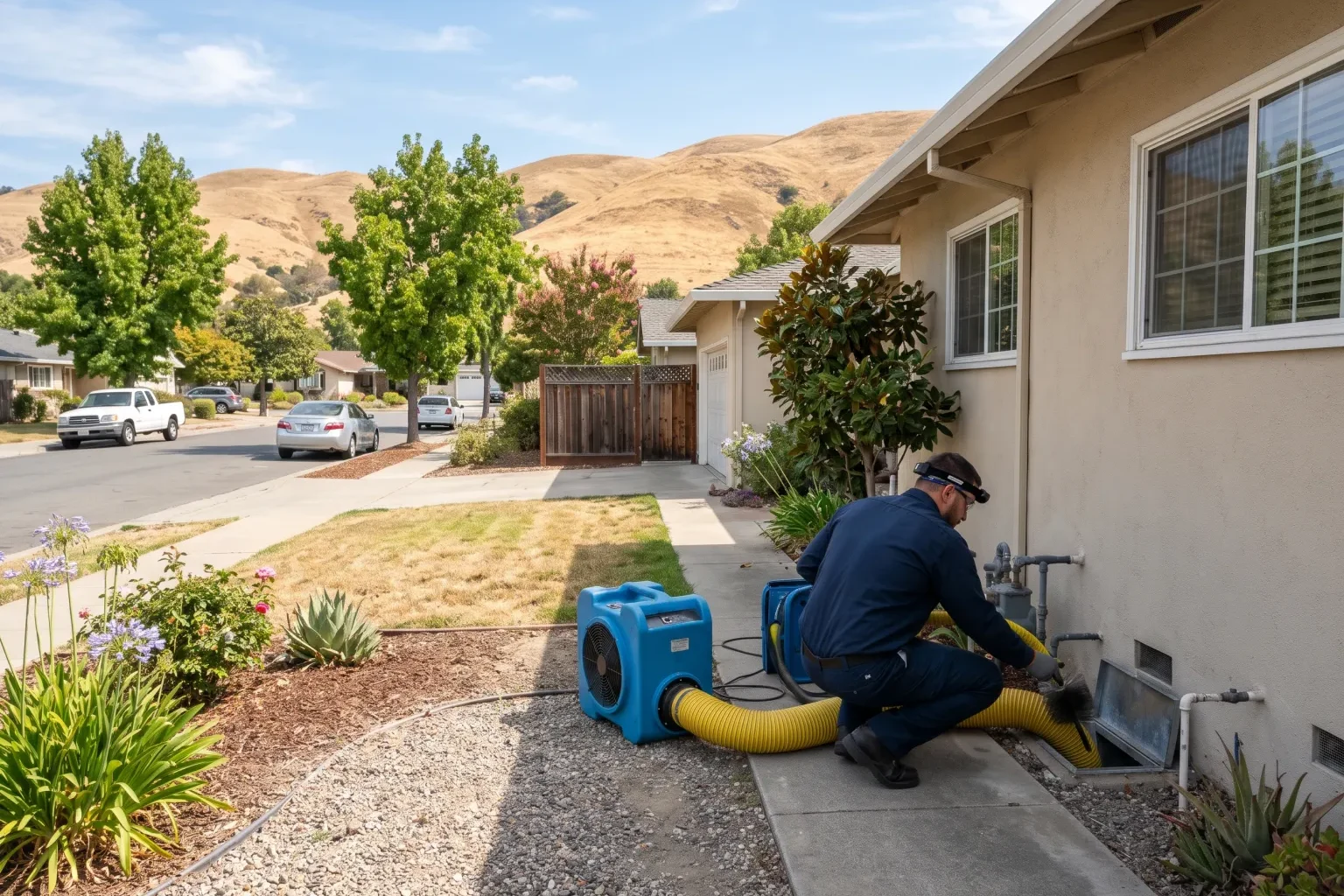
Cleaning is the right choice when the ducts are in good shape but have built-up dust, construction debris, or pest residue. We use negative-pressure equipment and agitation tools to loosen material and pull it out of the system rather than blowing it into your home.
Repair makes sense when sections are disconnected, leaking at the seams, crushed, or missing insulation. Sealing and reconnecting ducts can improve airflow to weak rooms and keep attic or crawlspace dust from being drawn in.
Replacement is usually the better option when flexible ducts are torn, brittle, or collapsing, when there's mold that can't be reliably cleaned from porous material like duct board or flex liner, or when the layout was never sized correctly for your system. If you're planning to replace a furnace in the coming years, it can also be a good time to review the ductwork. Under Bay Area Air District rules, gas furnaces manufactured from 2029 must meet a zero-NOx standard, which points many homeowners toward heat pumps at replacement time. Those rules don't require replacing working equipment, but if a switch is in your future, it helps to know whether your ducts will work with the new system.
What Affects the Cost of Duct Cleaning
We give you a clear quote after the inspection, once we know what the job involves. These are the main things that change the scope of the work:
- Size of your home and the number of supply and return vents
- Where the ducts run, since tight attics and low crawlspaces take more time to access
- Type of ductwork: metal, flexible duct, or duct board each need different methods
- How much debris is present, and whether it includes construction dust or pest material
- Whether mold remediation is needed, which may require removing and replacing sections
- Repairs found during the inspection, such as sealing, reconnecting, or adding insulation
- Whether you want the blower and coil cleaned at the same time
How a Duct Cleaning Visit Works
We schedule a time that works for you and arrive with the equipment needed to inspect and, if appropriate, clean the same day. Our technician will ask about anything you've noticed, such as odors, dust, or weak rooms, then inspect the system and explain what they see.
If cleaning is the right step, we cover floors near work areas, seal off vents, and connect a negative-pressure unit to the system. We then work through each supply and return run, clean the registers and grilles, and check the return area and filter. If repairs are needed, we'll explain them and get your approval before doing any additional work.
Before we leave, we walk you through what was done, show you before-and-after images, install a properly fitting filter if needed, and suggest how often to check it based on your home and household.