
The short answer
If your AC is blowing warm air, short cycling, leaking water, or making new noises, it needs a diagnosis before a small problem turns into a bigger one. PerfectFix HVAC Services finds the cause, explains your repair and replacement options in plain terms, and gives you a quote before any work starts.
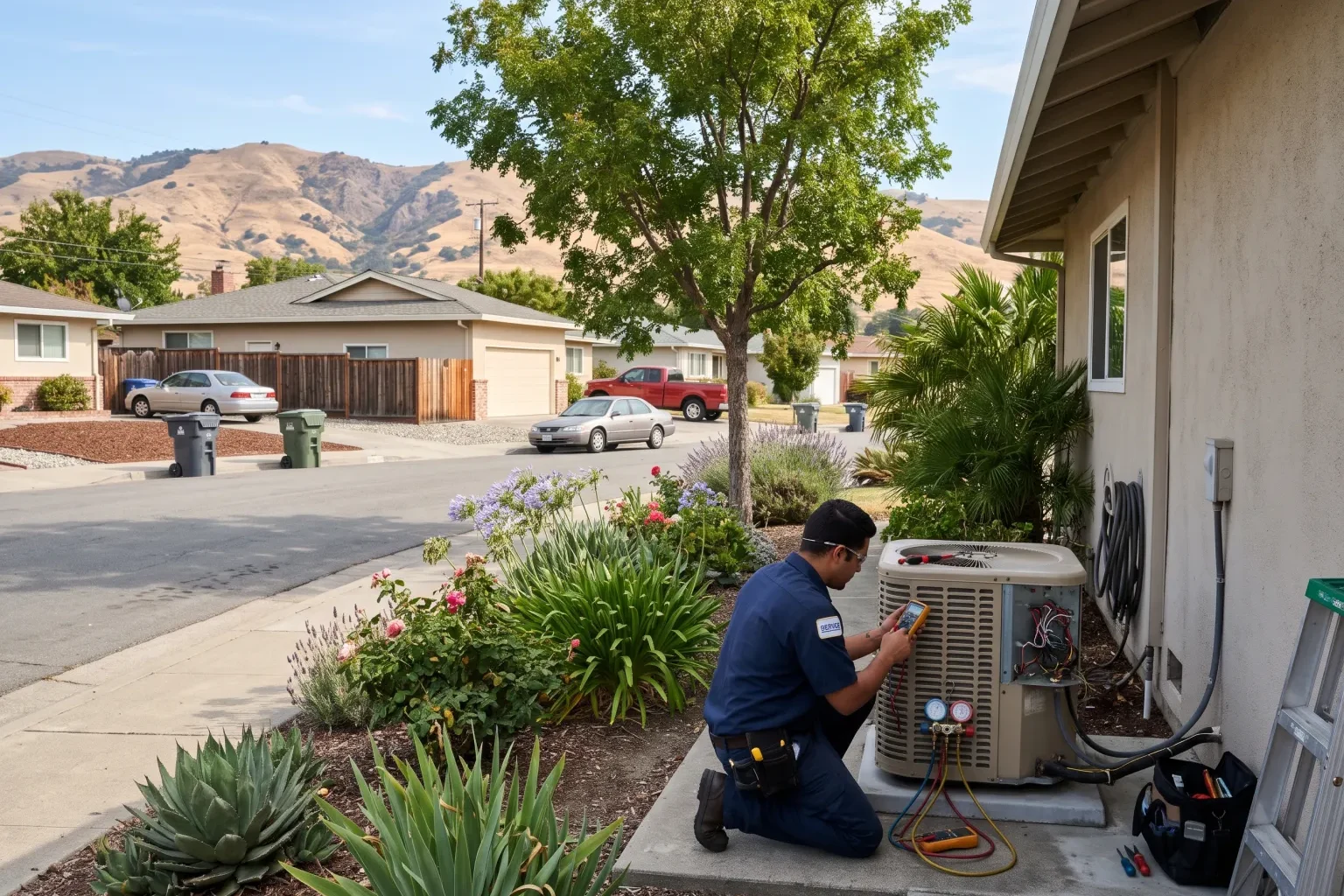
When your air conditioner quits on a hot afternoon in San Jose, you want a clear answer about what's wrong and what it will take to fix it. PerfectFix HVAC Services repairs central air conditioners, heat pumps, and ductless systems for homeowners in San Jose and nearby cities. Summers in the Santa Clara Valley are dry, and inland and southern parts of the valley run noticeably hotter than areas near the Bay. An AC that struggles in early summer usually gets worse as the season heats up. This page covers the warning signs, what our technicians check, how to think about repair versus replacement, what affects the cost, and what to expect from a visit.
Signs Your AC Needs Repair
Many AC problems start small and get worse under summer load. Catching them early often means a simpler repair. Call for service if you notice any of these:
If you smell burning or a breaker trips more than once, turn the system off at the thermostat and leave it off until it's inspected. Running it can turn a small electrical fault into a damaged compressor.
- Warm or barely cool air from the vents while the system is running
- Weak airflow, or rooms that never reach the temperature you set
- The system turning on and off every few minutes (short cycling)
- Ice on the refrigerant lines or the indoor coil
- Water pooling around the indoor unit or in the furnace closet
- Grinding, squealing, banging, or loud buzzing from the outdoor unit
- A breaker that trips when the AC starts
- Musty, burning, or electrical smells coming from the vents
- Energy bills climbing even though you haven't changed how you use the system
What We Check During an AC Repair Visit
A good repair starts with a full diagnosis, not a guess. Our technician looks at the whole system so the fix addresses the cause and not just the symptom. A typical inspection covers:
Once we find the problem, we explain what failed, why it likely failed, and what your options are before any work begins. If we spot something that isn't urgent but will need attention later, we'll tell you and let you decide what to do about it.
- Thermostat settings, wiring, and batteries
- Air filter condition and return airflow
- Indoor blower motor, blower wheel, and capacitor
- Evaporator coil for dirt, ice, or corrosion
- Condensate drain line, drain pan, and safety float switch
- Outdoor condenser coil, fan motor, and fan blades
- Capacitors, contactor, and electrical connections
- Refrigerant pressures and temperatures, and signs of a leak
- Compressor operation and electrical draw
- Visible ductwork for disconnected or crushed sections
Repair or Replace: How to Decide
Most AC problems can be repaired. Failed capacitors, worn contactors, clogged drain lines, dirty coils, and bad fan motors are common fixes that put a system back in service. Repair usually makes sense when the system is in otherwise good shape and the failure is a single component, not a core part of the system.
Replacement deserves a look when the compressor or indoor coil has failed on an older system, when a refrigerant leak keeps coming back, when the system uses an older refrigerant that is expensive to service, or when repairs have become a yearly event. Comfort matters too. If some rooms have never cooled well, a properly sized new system and duct corrections may fix problems that repair can't.
If you do replace, a heat pump is worth considering. It cools like an air conditioner and also heats your home. That may matter down the road: under Bay Area Air District rules, natural gas furnaces manufactured from 2029 must meet a zero-NOx emission standard, which in practice points homeowners toward heat pumps when a furnace is replaced after that date. The rules don't require you to replace working equipment, but knowing about them can help you avoid a rushed decision later.
On incentives: the federal Energy Efficient Home Improvement Credit covered qualifying heat pumps placed in service before December 31, 2025, and it isn't available for new installations after that date. Bay Area homeowners can check BayREN and their local clean energy provider for current heat pump and electrification incentives. Amounts and availability change by funding cycle, so we confirm the current offer before including it in a quote.
What Affects the Cost of AC Repair
We give you a clear quote after the diagnosis and before any work starts. The cost of an AC repair depends on several factors:
We'll walk you through the quote so you know exactly what each part of the work is and why it's needed.
- Which part failed. A capacitor or contactor is a smaller job than a fan motor, coil, or compressor.
- Whether refrigerant needs to be added, and whether a leak has to be found and repaired first
- The type and age of your system, and how readily parts are available
- Access to the equipment, such as an air handler in a cramped attic or a condenser in a narrow side yard
- Whether the technician finds more than one problem
- Timing, if you need service after hours or on a weekend
How an AC Repair Visit Works
When you contact us, we ask a few questions about what you're noticing, what kind of system you have, and when the problem started. That helps the technician arrive prepared with the right tools and common parts.
When the technician arrives, they'll talk with you about the problem, then inspect and test the system. You'll get a plain explanation of what's wrong and a written quote for the repair, along with replacement options if they make sense for your situation. No work is done without your approval.
After the repair, we run the system, check supply air temperatures and airflow, and confirm it's cooling properly. We'll also share simple habits that help prevent a repeat problem, like changing the filter on schedule and keeping plants and debris clear of the outdoor unit.